Ashura, the tenth day of the month of Muharram, stands as the most profound and emotionally charged date in the Shia Islamic calendar. It marks the martyrdom of Imam Husayn ibn Ali (AS), the grandson of Prophet Muhammad (PBUH), along with his family and companions at the Battle of Karbala in 680 CE. For Shia Muslims worldwide, Ashura is not merely a historical commemoration – it is a living, breathing covenant that defines their identity, shapes their spiritual consciousness, and renews their commitment to justice, truth, and resistance against tyranny. Understanding Ashura is essential to understanding the soul of Shia Islam.
The Historical Context: What Happened at Karbala?
To grasp the significance of Ashura, one must understand the political and spiritual crisis that led to Karbala. Fifty years after the death of Prophet Muhammad, the Islamic caliphate had fallen under the control of Yazid ibn Muawiyah, the second caliph of the Umayyad dynasty. Yazid was widely regarded by the early Muslim community, particularly the followers of the Prophet’s family, as a corrupt and impious ruler who openly flouted Islamic principles. He demanded allegiance from Imam Husayn, who refused to legitimize what he saw as a tyrannical and illegitimate regime.
Imam Husayn, knowing that his refusal would mean death, left Medina for Mecca and then set out toward Kufah (in modern-day Iraq), where he had received letters of support from the city’s inhabitants. However, the Umayyad governor intercepted his caravan and forced him to camp on the barren plains of Karbala, cut off from the nearby Euphrates River. For ten days, Imam Husayn and his 72 companions – including women, children, and his own infant son – were denied water under the scorching desert sun.
On the day of Ashura, the Umayyad army, numbering in the thousands, attacked. One by one, his companions fell, followed by his family members, until finally, Imam Husayn himself was martyred, his head severed from his body. The surviving women and children were marched in chains to Kufah and then to Damascus, to be paraded before the caliph Yazid. This event, while a military defeat, became a moral and spiritual victory of unparalleled magnitude.
Why Ashura Matters So Deeply to Shia Muslims
Ashura resonates so powerfully because it encapsulates the eternal struggle between truth and falsehood, between justice and oppression, between standing with integrity and compromising for survival. Several key themes explain its enduring significance:
The Triumph of Moral Principle over Worldly Power: Imam Husayn did not go to Karbala expecting military victory. He went because, as he famously stated, “If this religion of Muhammad is not to be established except through my death, then O swords, take me!” His sacrifice demonstrated that moral principles are worth dying for. In a world where might often dictates right, Imam Husayn showed that the powerless can achieve victory through the power of their conviction. This lesson resonates across centuries, inspiring oppressed peoples everywhere.
The Redemptive Power of Sacrifice: Shia theology holds that Imam Husayn’s martyrdom serves as a redemptive act for the Muslim community. By refusing to legitimize Yazid’s tyranny, Imam Husayn preserved the authentic message of Islam from being completely corrupted. His blood became a beacon, awakening generations to the dangers of silent acquiescence to injustice. As the famous saying goes, “Every day is Ashura, every land is Karbala” – meaning that the duty to stand against tyranny exists in every time and place.
The Covenant of Grief and Loyalty: For Shia Muslims, mourning for Imam Husayn is an act of loyalty to the Prophet’s family. It is a way of saying: “We were not with you at Karbala, but our hearts are with you.” Shias believe that weeping for Imam Husayn, or even feeling sorrow for him, brings divine blessings and intercession on the Day of Judgment.
Zaynab’s Defiance: The tragedy of Karbala did not end on Ashura. The survival of Imam Husayn’s sister, Zaynab, and his son, Imam Ali Zayn al-Abidin, transformed defeat into a moral victory. Zaynab gave powerful sermons in the courts of Kufah and Damascus, where she fearlessly denounced Yazid to his face. Her defiance demonstrated that even in captivity, the truth cannot be silenced. Zaynab’s role is central to Ashura observances, as she becomes the voice of the martyrs.
How Shia Muslims Observe Ashura
The observance of Ashura is a profound and multifaceted expression of grief, devotion, and communal solidarity. While practices vary across different Shia communities around the world, certain core rituals are nearly universal.
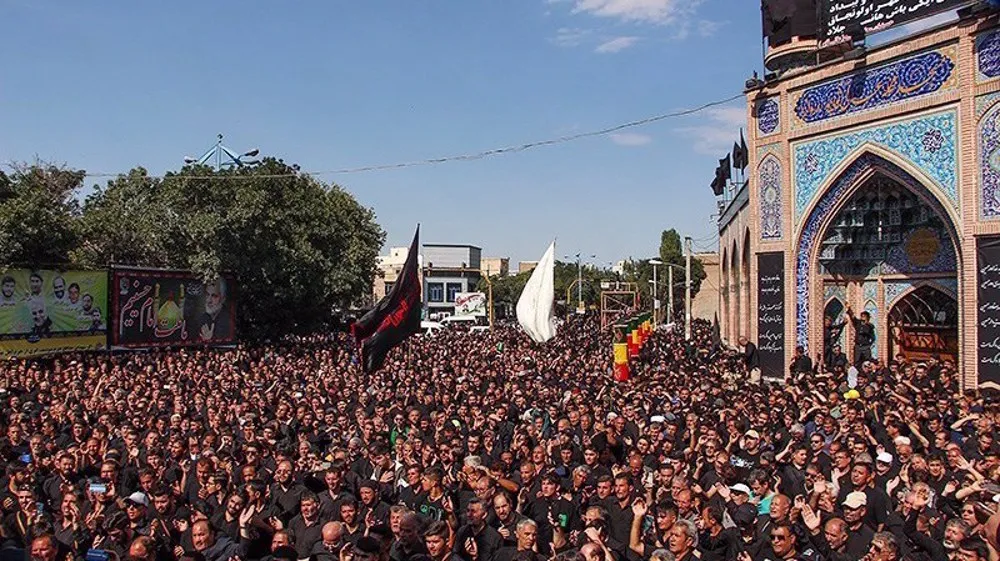
The Ten Days of Muharram: Mourning for Imam Husayn begins on the first day of Muharram and intensifies over the first ten days, culminating on Ashura itself. During this period, Shia Muslims wear black clothing as a symbol of mourning. Many refrain from listening to joyous music, attending festive events, or engaging in entertainment. The atmosphere is one of solemn reflection and collective grief.
The Mourning Gatherings: The heart of Ashura observance is the majlis, a gathering where a skilled orator recites the story of Karbala, particularly the events of Ashura. These sessions typically include:
- Recitation of poetry eulogizing Imam Husayn and the martyrs
- Detailed narration of the suffering endured at Karbala
- Communal weeping and expressions of grief
- Prayers and supplications for the martyrs
Rhythmic Mourning Poetry: Latmiyyat are rhythmic poems of mourning, often set to music (without instruments), that are recited or chanted collectively. These poems express love for Imam Husayn, grief for his suffering, and condemnation of his killers. They are often accompanied by rhythmic chest-beating (sineh-zani), a physical expression of solidarity and sorrow.
Processions: On Ashura day, massive processions fill the streets of Shia communities worldwide. Mourners march in black, carrying:
- Alam: Large metal standards or banners symbolizing the banners of Imam Husayn’s camp
- Nakhl: Massive wooden structures representing the bier of the martyrs
- Replicas of the shrine of Imam Husayn
These processions often move toward a central Husayniyyah (a dedicated mourning hall) or mosque, where the final, most intense mourning rituals occur.
Charitable Acts: Amid the mourning, Ashura also emphasizes charity and compassion. Many Shias distribute food and drink to mourners and the poor, symbolically providing the water that Yazid’s army denied to Imam Husayn. This act transforms grief into generosity, channeling sorrow into service.
The Forty Days: Arbaeen
The mourning does not end on Ashura. It culminates forty days later on Arbaeen, which marks the return of the surviving captives to Karbala to visit the graves of the martyrs. Today, Arbaeen has become the largest annual peaceful gathering in the world, with over 20 million Shia pilgrims walking to Karbala from Najaf and other cities, creating a sea of mourners that stretches for hundreds of kilometers.
The Eternal Flame of Karbala
For Shia Muslims, observing Ashura is not merely remembering the dead – it is renewing a pact. By weeping for Imam Husayn, they affirm that they would have stood with him. By beating their chests, they physically express their solidarity. By walking to Karbala, they declare that the message of that day remains alive.
Ashura matters because it speaks to something universal: the human capacity to stand for truth even when standing alone. The tragedy of Karbala, then, transcends its historical context to become a timeless parable. Imam Husayn’s sacrifice says that some principles are worth dying for, that justice is more precious than life, and that the oppressor’s victory is always temporary.
Leave a Reply