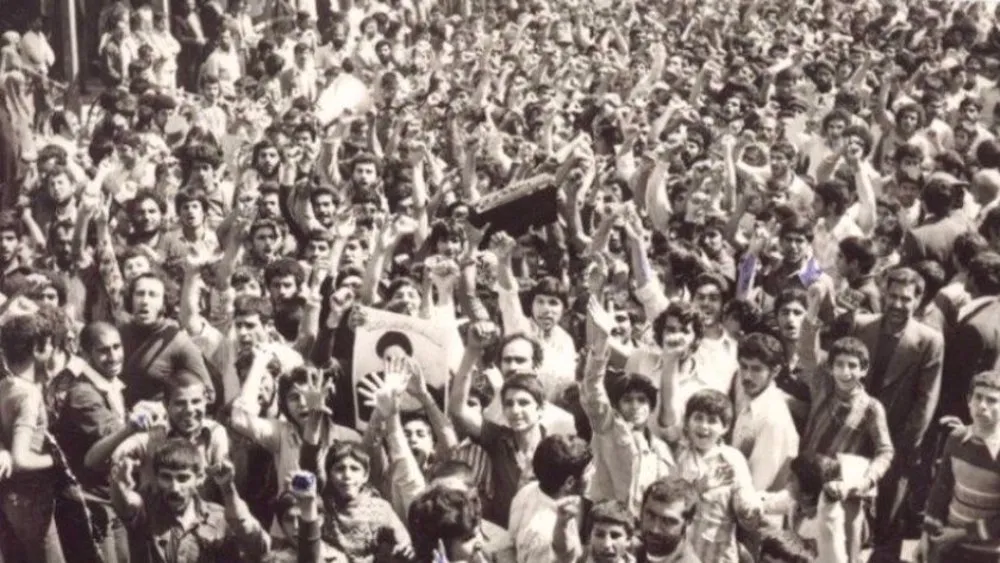
On the morning of June 5, 1963 – known in the Iranian calendar as the 15th of Khordad – the streets of Qom, Tehran, and other Iranian cities erupted in unprecedented protest. Thousands of ordinary Iranians poured into the streets to demand the release of Ayatollah Ruhollah Khomeini, a religious scholar who had dared to publicly denounce the Shah’s regime. The violent crackdown that followed claimed hundreds of lives, but rather than extinguishing the opposition, the 15th of Khordad Uprising marked the moment when the embers of resistance were fanned into a flame that would, sixteen years later, engulf the Pahlavi dynasty and give birth to the Islamic Republic of Iran.
The Prelude: The White Revolution and Rising Tensions
To understand the uprising, one must first understand the context of escalating confrontation between Iran’s religious establishment and the Shah’s regime. In January 1963, Mohammad Reza Pahlavi announced an ambitious reform program called the “White Revolution” – a modernization plan that included land reforms, privatization of state enterprises, western-style education, among other aspects. The Shah presented these measures as a path toward development.
However, for Imam Khomeini and other senior religious scholars, the White Revolution represented something far more sinister. They perceived it as an anti-religious program designed to undermine Islamic values, strengthen the Shah’s grip on power, and deepen Iran’s dependency on the West, particularly the United States. When the Shah held a national referendum to approve the reforms, Imam Khomeini called for a boycott. He canceled the traditional Nowruz (New Year) celebrations as a sign of protest and issued a manifesto accusing the Shah of violating the Constitution, spreading moral corruption, and submitting to American and Israeli interests.
The Sermon That Shook the Regime
The decisive moment arrived on June 3, 1963 – the day of Ashura, the holiest day of mourning in the Shia calendar, commemorating the martyrdom of Imam Husayn (AS) at Karbala. Speaking before a large gathering at the Feyziyeh Seminary School in Qom, Khomeini drew an audacious parallel between the Umayyad Caliph Yazid – the tyrant responsible for killing Imam Husayn – and the Shah himself.
The response was immediate. In Tehran, an estimated 100,000 Khomeini supporters marched past the Shah’s palace, chanting “Death to the dictator!” and “God save you, Khomeini!” The regime, taken by surprise by the scale of the mobilization, decided to act.
The Arrest and the Uprising
At 3 o’clock in the morning on June 5, security forces and commandos raided Khomeini’s home in Qom. The arrest was carried out with remarkable secrecy and Khomeini was hastily transferred to the Qasr Prison in Tehran.
The news of his arrest spread like wildfire. As dawn broke on June 5, masses of enraged demonstrators took to the streets. The demonstrators wore white burial garments, symbolizing their readiness to embrace martyrdom for their cause. In Tehran, protesters attacked police stations, SAVAK (the secret police) offices, and government buildings.
The regime responded with overwhelming force. The Shah declared martial law and a curfew, with shoot-to-kill orders. Tanks and paratroopers confronted protesters in Qom, Tehran, Shiraz, Mashhad, and other cities. Hundreds were martyred at the hands of the regime’s security forces across the country.
The Aftermath: Imprisonment, Exile, and the Transformation of Opposition
Khomeini was held for nineteen days at Qasr Prison before being moved to house arrest in Tehran. He was finally released on April 7, 1964, but the respite was temporary. Later that year, after denouncing the Shah’s granting of diplomatic immunity to American military personnel, Khomeini was arrested again and this time exiled – first to Turkey, then to Iraq, and finally to France.
On the surface, the regime had won. The uprising was crushed, its leader driven into exile. But the 15th of Khordad had fundamentally altered the political landscape of Iran in ways the Shah could not reverse.
First, the uprising demonstrated the extraordinary power of religious opposition. For the first time, the masses had risen in defense of a cleric, revealing that the mosques and seminaries could mobilize far more effectively than secular opposition movements. According to one analysis, a key feature of the uprising was that it was simultaneously “popular, Islamic, and had a single leadership” – an unprecedented combination in modern Iranian history.
Second, the brutal suppression radicalized many opposition figures. After witnessing the regime’s willingness to massacre unarmed protesters, numerous activists concluded that peaceful political opposition was futile, and the nature of the struggle shifted toward armed resistance.
Third, the uprising transferred the mantle of opposition leadership decisively to Islamists, marginalizing leftist and nationalist forces that had previously dominated anti-Shah activism. Islamic associations in bazaars, schools, and universities multiplied in the aftermath.
The Road to 1979: From Sparks to Flames
For sixteen years following the 15th of Khordad, the memory of June 1963 served as an enduring source of inspiration and a rallying cry for the opposition. Khomeini, from exile, cultivated his network of supporters and refined his revolutionary doctrine of Velayat-e Faqih (Guardianship of the Jurist) – the idea that legitimate governance in the absence of the Hidden Imam belongs to qualified Islamic jurists.
When the revolutionary upheaval finally erupted in 1978, the 15th of Khordad was invoked as a foundational moment. In February 1979, the Shah fled Iran, and Khomeini returned from exile to a triumphant welcome. The uprising that had been suppressed sixteen years earlier had finally achieved its aim: the overthrow of the monarchy and the establishment of the Islamic Republic of Iran.
The 15th of Khordad Uprising was not the beginning of opposition to the Shah – discontent had simmered for decades, fueled by the CIA-orchestrated 1953 coup that restored the Shah to power and the subsequent erosion of democratic institutions. But June 1963 marked a decisive turning point. It transformed Khomeini from a respected religious scholar into a national political leader. It revealed the revolutionary potential of Shia Islam when mobilized against tyranny.
Khordad National Uprising stands as testament to a truth that Khomeini understood deeply: that sometimes, a single sermon, a single arrest, and a single moment of collective courage can alter the course of history.
Leave a Reply