Among the festivals of Shia Islam, none carries the theological weight, political urgency, and spiritual joy of Eid-e Ghadir. Celebrated on the 18th of Dhu al-Hijjah, which is the same month in which millions complete the Hajj pilgrimage – this day commemorates an event that Shia Muslims believe completed the divine message and established the line of guidance for humanity until the end of time. While many Sunnis also acknowledge the historical incident, for Shias, Eid-e Ghadir is not merely a historical anniversary but the very foundation of their religious identity – a celebration of divine appointment, moral succession, and the perpetual covenant between God and the believers.
The Event at Ghadir Khumm
In March 632 CE, the Prophet Muhammad (PBUH) performed his final pilgrimage – the Farewell Hajj. As the pilgrims prepared to disperse after completing their rituals, the Prophet received a critical divine command while descending from Arafat to Mina.
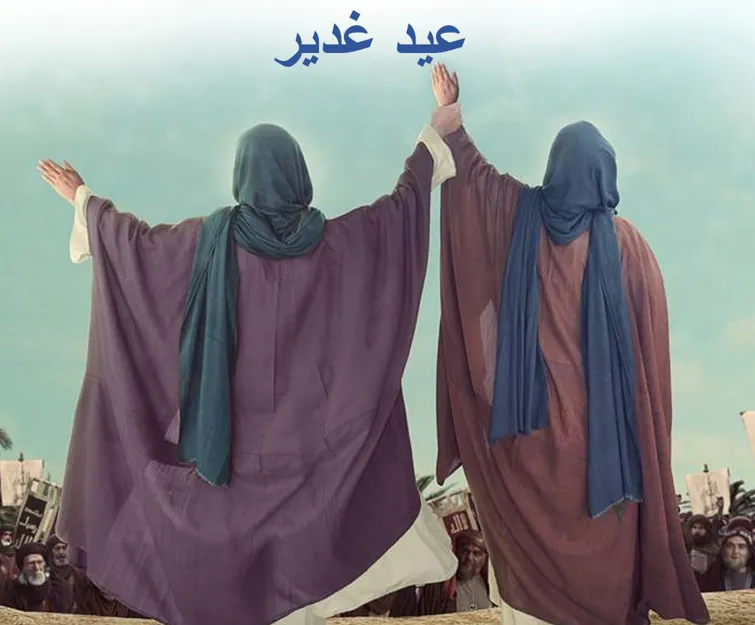
At a place called Ghadir Khumm (the Pool of Khumm), the Prophet ordered the massive crowd of perhaps one hundred thousand pilgrims to stop. He delivered a lengthy sermon, asked rhetorically whether he had fulfilled his mission and whether God had greater authority over believers than they had over themselves – to which the crowd responded affirmatively. Then, taking his cousin and son-in-law, Ali ibn Abi Talib (AS), by the hand, the Prophet declared:
“Whoever I am his master (mawla), then this Ali is his master. O God, befriend whoever befriends him, and be hostile to whoever is hostile to him. Support whoever supports him, and abandon whoever abandons him.”
Immediately after the proclamation, according to numerous accounts, the Companion Umar ibn al-Khattab congratulated Imam Ali, saying, “Congratulations, O son of Abu Talib! You have become my master and the master of every believing man and woman.”
What Eid-e Ghadir Symbolizes
Eid-e Ghadir is far more than a celebration of Imam Ali’s personal virtues. It carries multiple, interlocking layers of meaning for Shia Muslims.
Completion of Prophethood: The Prophet’s mission was not merely to deliver the Quran but to ensure the correct interpretation and application of its message would continue. Without an authoritative guide after him, the Prophet’s work would remain incomplete – a loose scripture open to endless distortion. Ghadir represents the moment when the arc of prophecy reached its intended conclusion.
Divine Appointment: The Prophet did not put Ali to a vote; he proclaimed what God had commanded. For Shias, legitimate authority – religious and political – cannot emerge merely from popular will, human consultation, or military might. It must derive from divine designation.
Unity of Religious and Political Authority: The Arabic word mawla used by the Prophet carries multiple meanings: master, guardian, authority, friend, protector. When the Prophet declared Ali as mawla of the believers, he was declaring that the same authority he exercised over the community – to interpret scripture, lead prayer, judge disputes, and command obedience – now belonged to Ali. There is no separation of mosque and state in this vision; spiritual guidance and political leadership are one and the same.
Perpetual Presence of a Divinely Guided Authority: For Shias, the Imams who followed Ali – descendants through his sons Imam Hasan (AS) and Imam Husayn (AS) – carried this same authority. And after the Occultation of the Twelfth Imam, the duty of striving for justice and awaiting his return becomes an active theological obligation. Ghadir thus negates the possibility of legitimate tyranny: if God has appointed guides, no usurper, however powerful, can claim divine sanction.
How Shia Muslims Observe Eid-e Ghadir
Unlike the solemn mourning of Ashura, Eid-e Ghadir is a day of joy, feasting, and community celebration. It represents the joyous culmination of the Prophet’s mission. The traditional observances include:
Ritual Bath and Best Attire: Shias begin the day by performing ghusl (full ritual bath), wearing new or clean clothing, and applying perfume – acts of joyful preparation befitting the day of covenant renewal.
Fasting: Fasting on the day of Ghadir is considered highly meritorious, equivalent in reward to fasting for an entire lifetime. It is a day of gratitude (shukr) for the completion of God’s favor.
Special Prayers and Supplications: The most famous prayer recited on Ghadir is the Du’a al-Nudba (Supplication of Lamentation), which expresses longing for the return of the Hidden Imam while celebrating the continuity of divine guidance. Many also recite the Ziyarat of Imam Ali at his shrine in Najaf or, for those unable to travel, face toward Najaf and recite the visitation prayer.
Congratulatory Greetings: Shias greet one another with variations of “Blessed be the day of Ghadir for you” and recount the event in gatherings. Children receive gifts, and families host feasts.
Lectures and Recounting: Sermons and study circles on the day detail the historical event, explore its theological implications, and connect its message to contemporary conditions. Poets compose and recite panegyrics celebrating Imam Ali and the other Imams.
Inter-Community Relations: Many Shia communities invite neighbors of other faiths or denominations to participate in the feasting, explaining the event as an affirmation of divinely guided leadership rather than as an attack on others’ beliefs.
For Shia Muslims, Eid-e Ghadir is the day when God looked upon the completed religion and said: “This is enough. This is perfect. This will guide humanity until the end.” In celebrating Ghadir, Shias do not merely remember an event that happened fourteen centuries ago. They renew their own pledge of loyalty – not to a memory, but to a living tradition of justice, knowledge, and resistance that began at a pool in the desert and continues in the hearts of believers today.
Leave a Reply